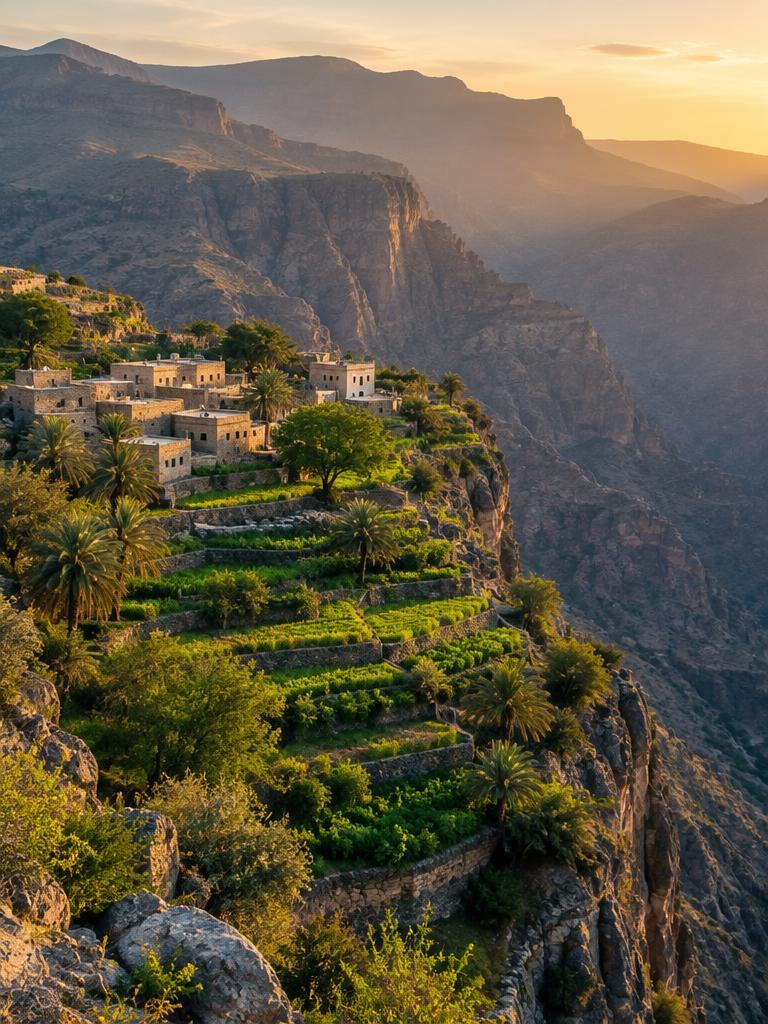
Every spring, the terraced villages of Jebel Akhdar turn pink as damask roses bloom. Here's when to go, where to walk and how the rose water ends up in your Omani coffee.
Two thousand metres above the Omani coast, the villages of Al Aqor, Al Ayn and Wadi Bani Habib hang off the cliffs of the Saiq Plateau like balconies. For a few short weeks each spring, their terraces fill with damask roses — and the whole mountain smells like perfume.
When to come
Rose season on Jebel Akhdar runs roughly from late March to mid-May, moving higher up the terraces as the weeks pass. April is the safest bet: the roses are at their peak, the daytime air is a comfortable 25°C and the evenings are cool enough for a jacket by the fire.
Timing matters within the day, too. The farmers pick the roses before the sun gets high, so if you walk the village trails early in the morning you'll see the harvest itself — baskets carried on heads, families moving between terraces that their great-grandparents built.
The rose water trail
The picked petals go straight to small stone distilleries in the villages. Watch the traditional alembic stills work for an hour and you'll understand why a small bottle of Jebel Akhdar rose water costs what it does — it takes whole baskets of petals. The water flavours Omani halwa and is sprinkled over guests' hands as a welcome, and the mountain hotels serve it in everything from lemonade to lattes.
“You don't visit the rose villages for a photo. You visit for the smell that stays on your jacket for the rest of the trip.”
Make a day of it
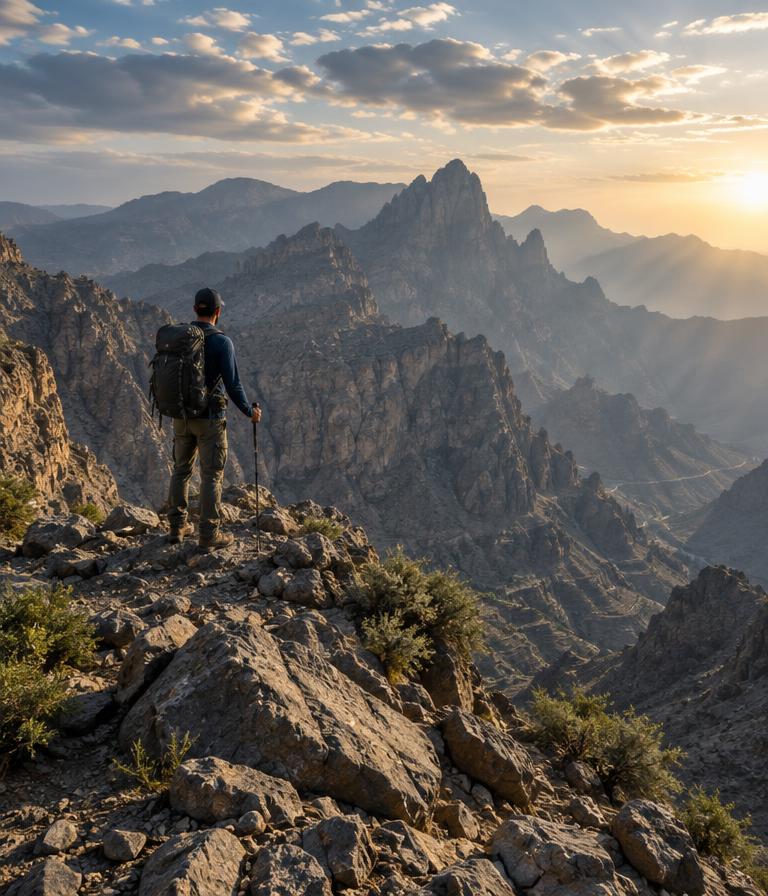
- Walk the Al Ayn to Al Aqor rose village trail in the early morning (2–3 hours, moderate).
- Visit a working distillery and taste the fresh rose water.
- Continue to the abandoned mud-brick village of Wadi Bani Habib at the plateau's edge.
- Finish with a late lunch overlooking the terraces — the view is best with a plate of shuwa.