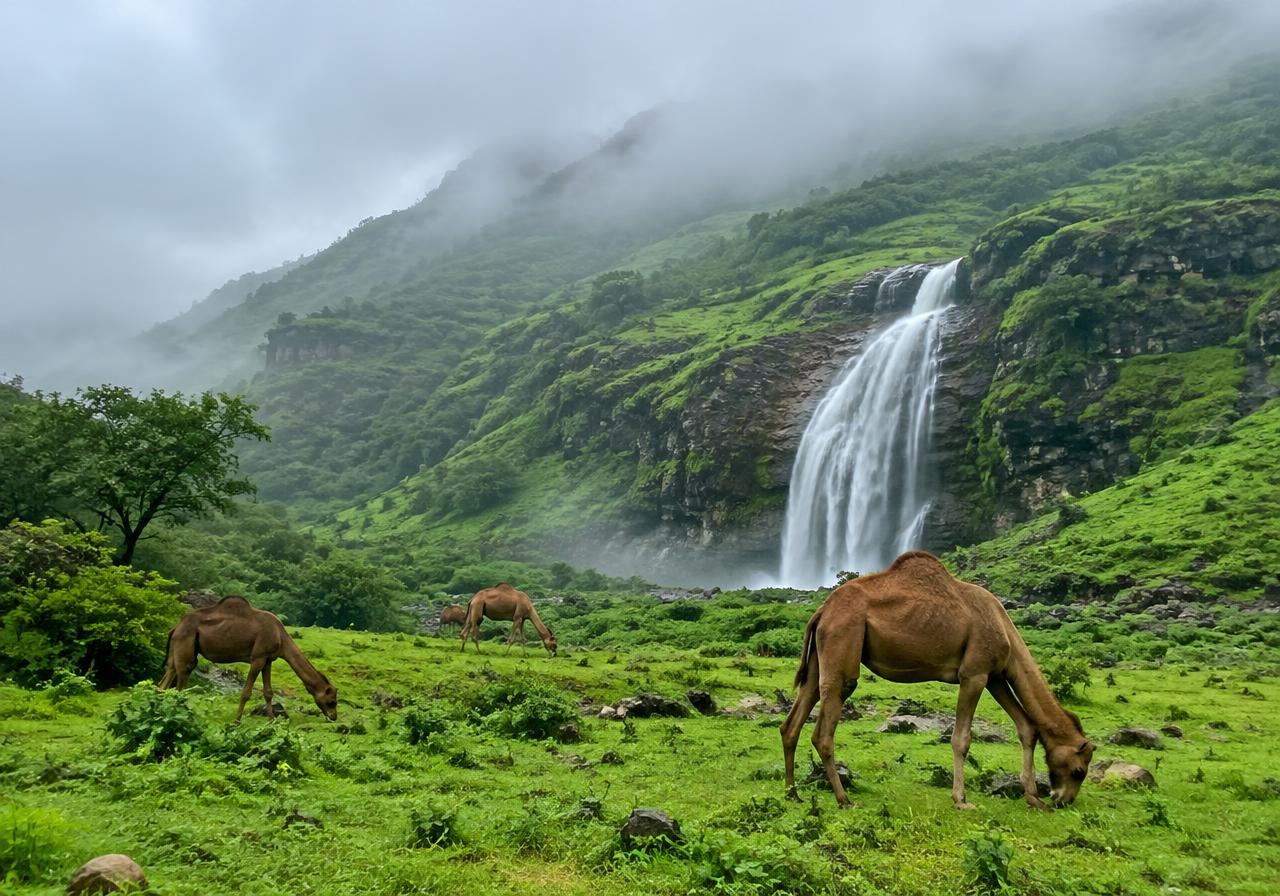
While the rest of Arabia bakes, Oman's southern coast disappears into cool mist. Khareef season is the strangest, best-kept secret in the Gulf — here's how to plan for it.
Every year from late June to early September, the Indian Ocean monsoon hits the Dhofar coast and does something impossible: it turns a brown, arid landscape bright green, drapes it in fog, and drops the temperature to a gentle 25°C. Omanis call it khareef, and half the Gulf books their holidays around it.
What it actually feels like
The mist comes and goes in waves. You drive up into the Jebel Samhan hills in sunshine, round a corner, and suddenly you're inside a cloud with springs running across the road. Ten minutes later the fog lifts and the whole coast appears below you, impossibly green. Waterfalls that don't exist in winter are everywhere — Wadi Darbat and Ayn Razat are the classics.
Planning around the crowds
Khareef is no secret to Omanis and Saudis — August weekends are busy. The trick is timing: July is greener and quieter, and weekdays on the mountain are peaceful even in peak season. Book hotels early regardless; the good ones fill months ahead.
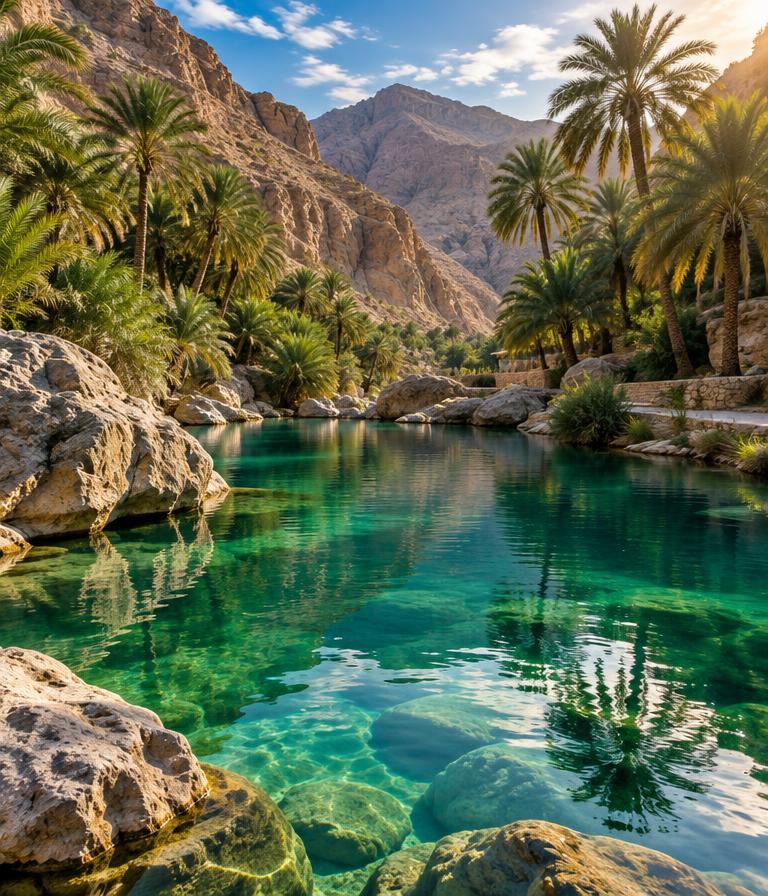
- Wadi Darbat — springs, waterfalls and grazing camels under the mist.
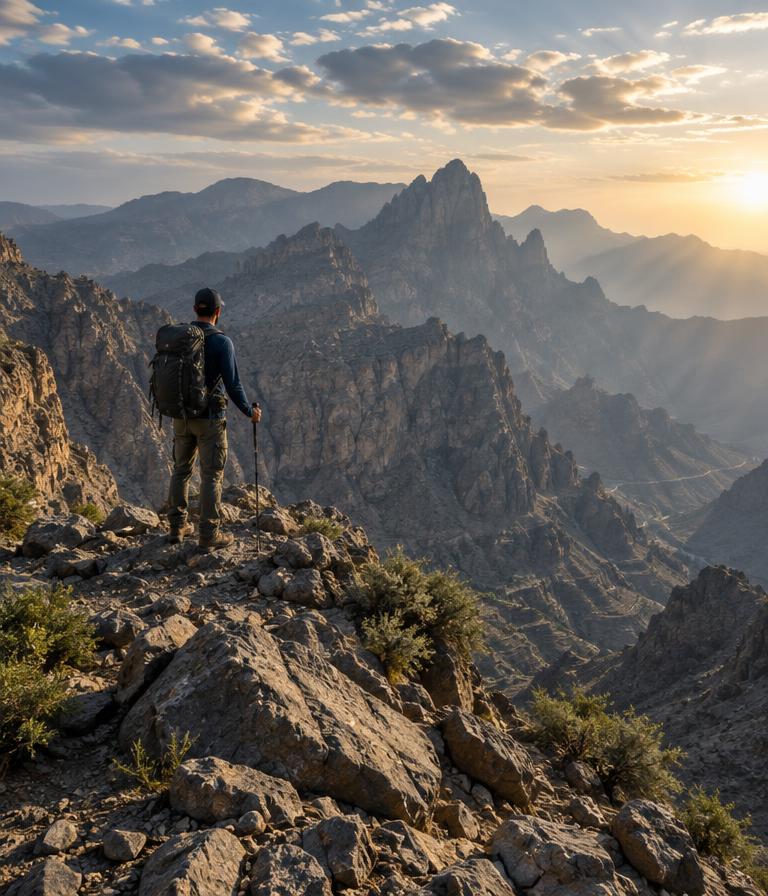
- Jebel Samhan viewpoint — the coast appears and disappears below your feet.
- Frankincense sites — Al Baleed and the Land of Frankincense museum are UNESCO-listed.
- Mughsail beach — blowholes and the cliff-road to Yemen border scenery.
“We came for the beaches. We stayed for the fog. Nobody believes the photos — they all think we've photoshopped Arabia into Scotland.”