Dune driving at sunset, dinner around the fire, and a sky so full of stars it doesn't look real. What a desert camp night in the Wahiba Sands is actually like.
The Wahiba Sands are where Oman slows down. Three hours from Muscat, the tarmac simply ends and 12,500 square kilometres of red-gold dunes begin. Everything about the next twenty-four hours runs on desert time.
The drive in
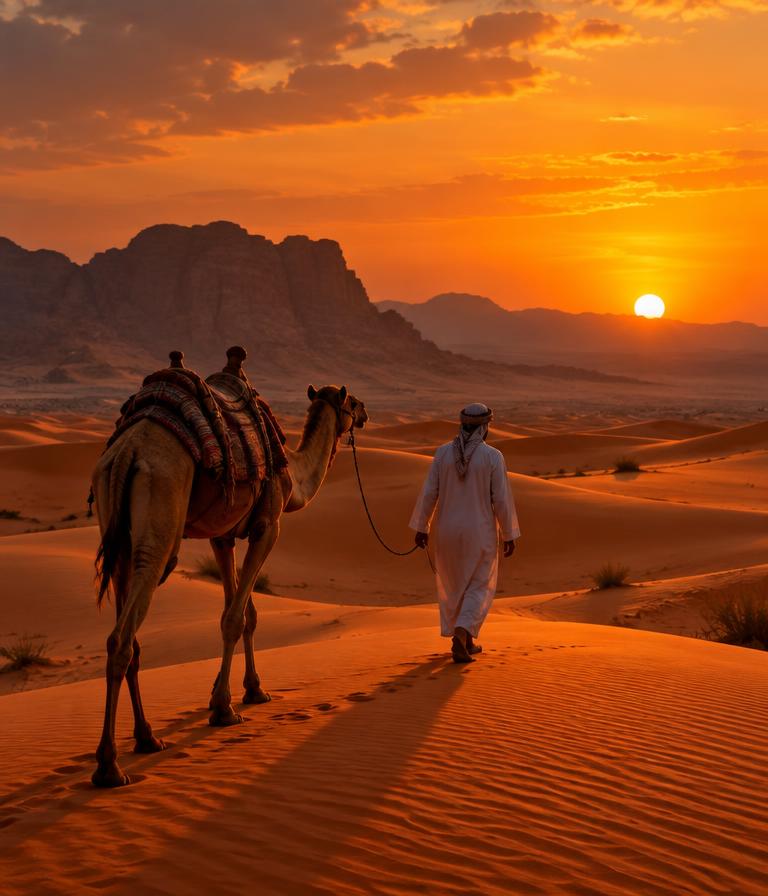
Your driver lets some air out of the tyres at the edge of the sands, and then the road disappears. Dune driving feels like a slow rollercoaster — cresting ridges where the sand changes colour from ochre to deep red, the camel-owning Bedouin waving as you pass. First-timers go quiet for the first ten minutes, then can't stop laughing.
Sunset, dinner and the quiet after
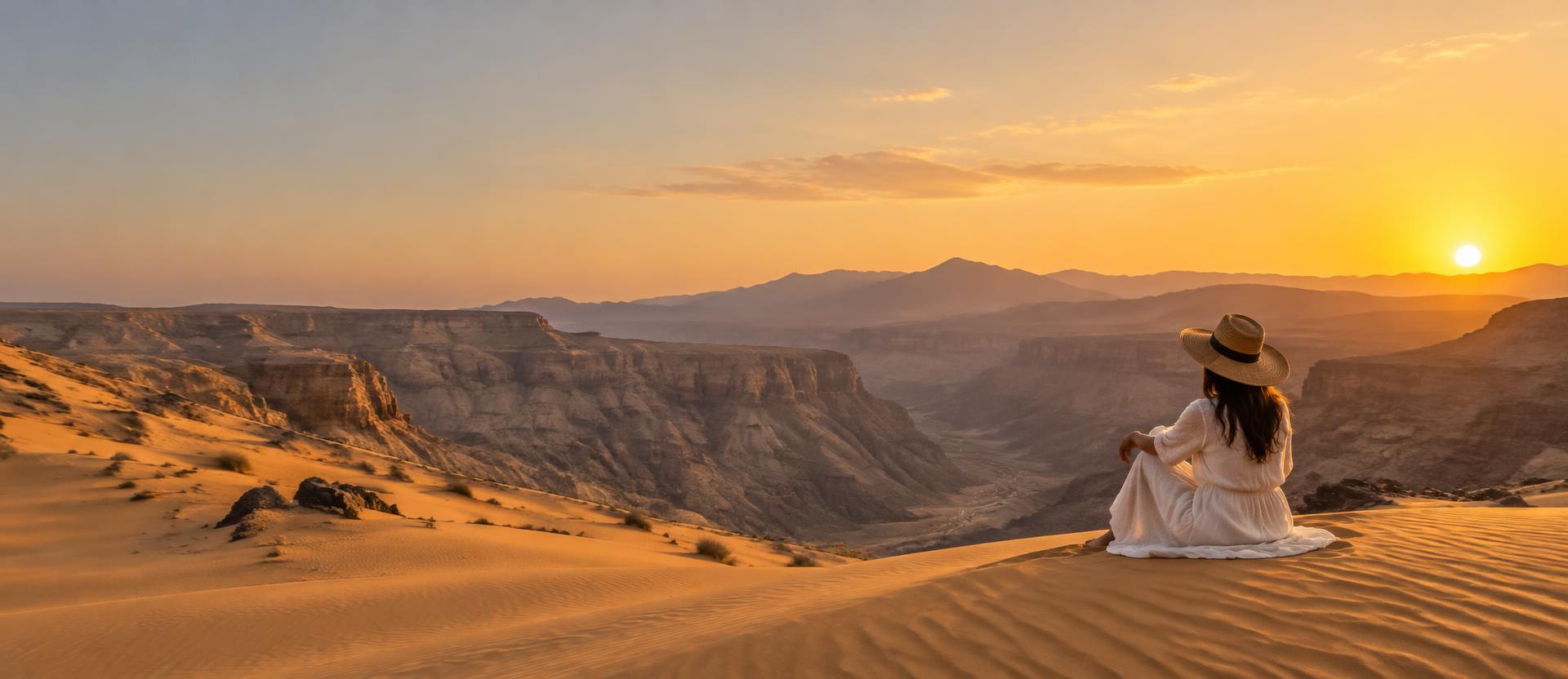
You'll stop on a high ridge about an hour before sunset. Nobody says much. The dunes turn from gold to copper to violet in the space of half an hour, and then the camp's lanterns come on below you. Dinner is Omani: rice, slow-cooked meat, fresh bread baked on the fire, dates and sweet tea.
After dinner the camp goes quiet in the best way. With no towns for a hundred kilometres, the Milky Way doesn't just appear — it dominates. Our guides point out the constellations the Bedouin used to navigate by, and many guests simply pull a cushion out onto the sand and don't go to bed for hours.
“The desert at night is not dark. It's the opposite — I've never seen so much light.”
Before you go
- Pack a warm layer — desert nights get cold in every season.
- Bring closed shoes; the sand cools slowly after sunset.
- Charges for cameras and phones: bring a power bank, camps run on generators.
- Wake up early once. Dawn over the dunes is even better than sunset.